Class 2: Demystifying AI. "Congratulations, you all turned into an AI just a minute ago."

With Tony Jones, ex-Executive Creative Director, McCann; Co-founder, Creative AI Academy
The class in brief
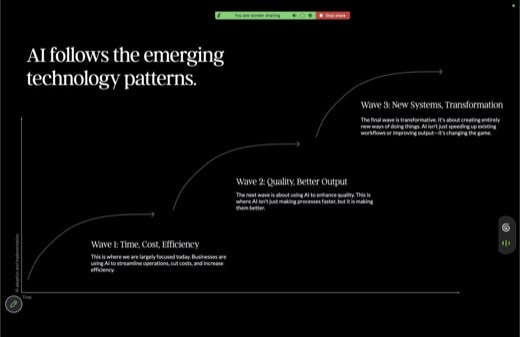
After this page you can explain what a hallucination actually is in one sentence, and reframe a stuck brief the way Dom's spacesuit prompt did, sideways, not harder. The deep dive the syllabus promised covered three waves of emerging tech, the three layers of AI (ANI, AGI, ASI), and why hallucinations happen.
Dom ran the room through a live word-prediction exercise before naming a single framework. Then he walked from augmented-versus-autonomous relationships to his own Infinite Design Method, closing on Tony's AI Lingo Bingo vocabulary app.
Three waves of AI and the peanut butter test
Why this matters · 6:34 PM
The more context you add, the better the machine predicts. That's the whole trick.
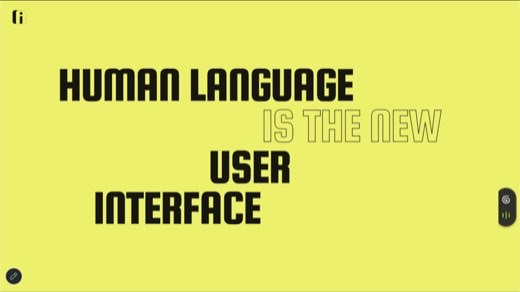
Dom opened on an Apple accessibility spot that never says the word AI: Muhammad Ali's own words narrating over demos of Siri, image description, and door detection for blind users. His point: technology doesn't need a name to matter. It needs to make the world more accessible and more connected .
Then the room ran the peanut butter exercise live in chat: type the word that follows "peanut butter." Toast, sandwich, jelly, jelly, jelly, cookie, latte. Add "and ___" to the prompt and almost everyone converges on jelly. That's the whole mechanism in one minute: more context, sharper prediction, same math whether the predictor is human or machine.
"AI doesn't need a word. It doesn't need a name. What it really can do, it can make our world more accessible, more inclusive, more connected."
Dom, on the Apple accessibility spot
The framework · 6:46 PM
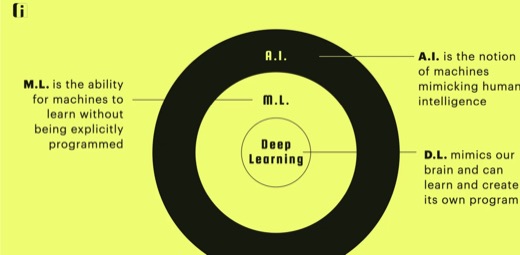
The three layers of AI
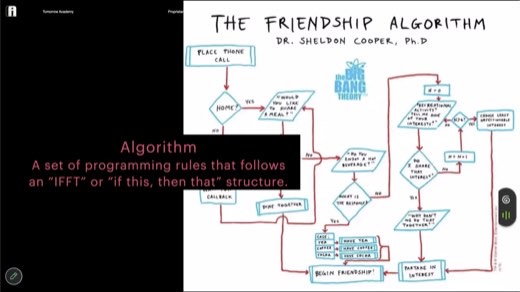
ANIArtificial Narrow Intelligence
Deep learning and machine learning aimed at specific tasks: object recognition, translation, content generation. This is where the class plays right now.
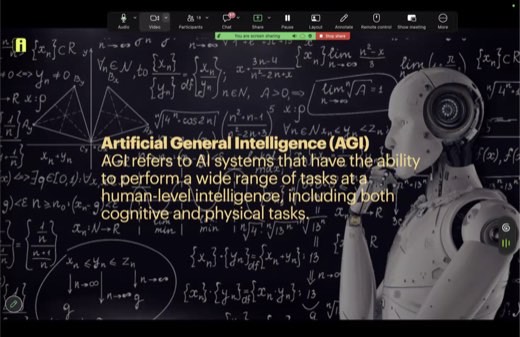
AGIArtificial General Intelligence
Human-level performance across cognitive and physical tasks, including robotics. Agents sit at autonomy level 2 today; researchers expect level 3 in three to five years.
ASIArtificial Super Intelligence
Surpasses human intelligence across multiple domains. Dom's own line: "a theory, not even a hypothesis," decades away if it happens at all.
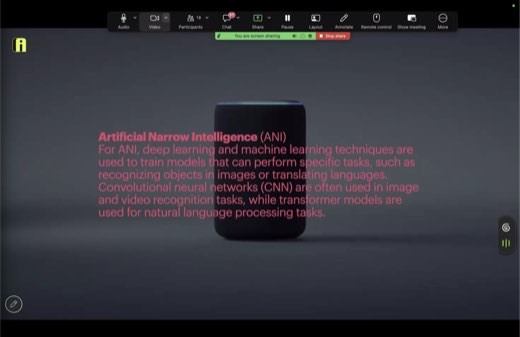
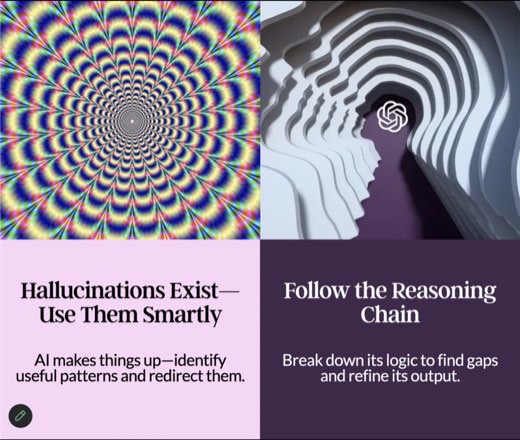
Hallucinations got their own metaphor: reading a book from the middle instead of the beginning. You'd still tell a story, but you'd make things up to fill the gaps you never read . More tokens of context, less of that guesswork.
The exercise · 7:16 PM
Running the spacesuit prompt live
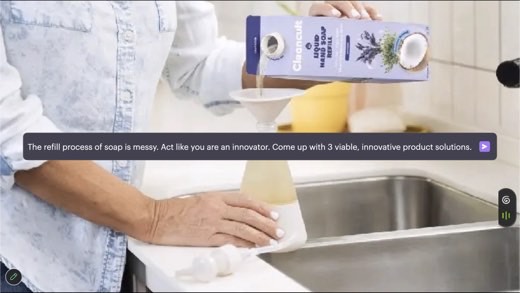
A real four-day-turnaround brief from a soap-refill company.
Generic prompt first: "act like an innovator, give me three product ideas" . Result: a funnel idea, messy. Refined prompt, "act like an innovative product designer, disrupt the category," got a dissolving pouch: better, but the company had already market-tested it and it failed.
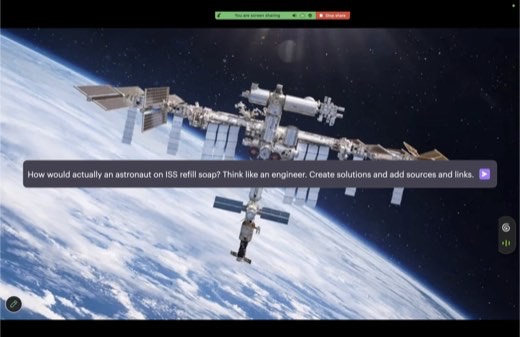
The breakthrough came sideways, not harder
How would an astronaut on the ISS refill in space?
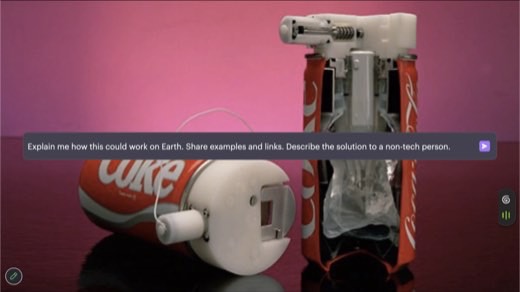
Dom's actual breakthrough prompt, reframing the same brief through an unrelated lens . It returned a vacuum-bottle concept: air out, soap in, low-tech. The final product never shipped, too complex to manufacture, but the lesson stuck: a lateral reframe beats a "better" version of the same ask.
Three prompts produced three different outcomes
Same brief, same four days, three attempts. Generic in, generic out. Sharper instructions, a marginally sharper but still-generic idea. Only the lateral question, asked from a completely different world, produced something nobody else in the category would have reached for.
Augmented vs autonomous
The craft · 7:23 PM
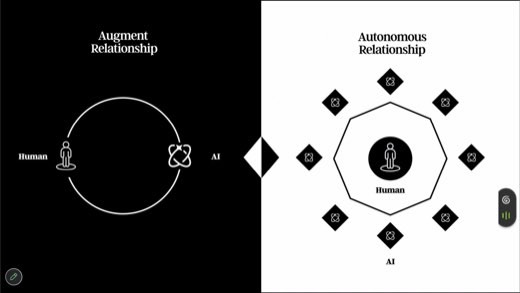
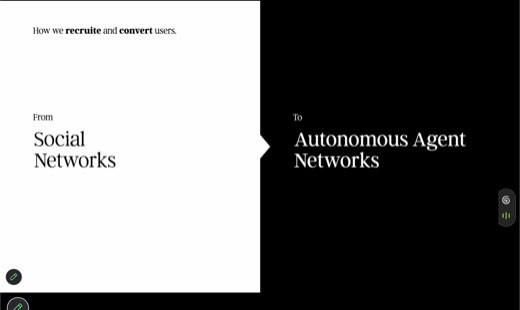
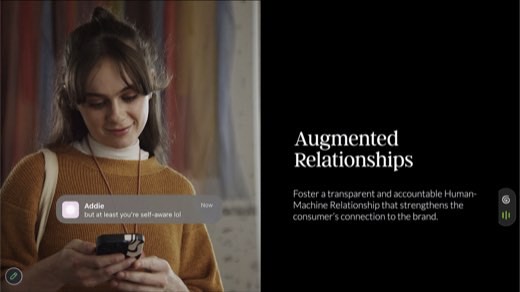
Two relationships to design for: augmented and autonomous.
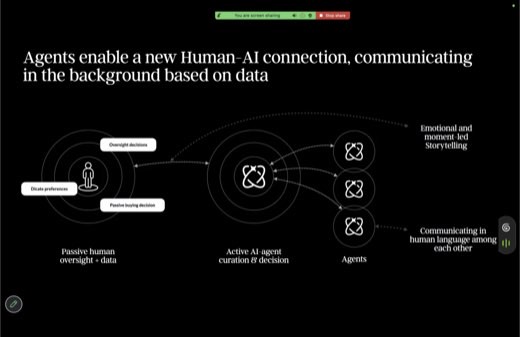
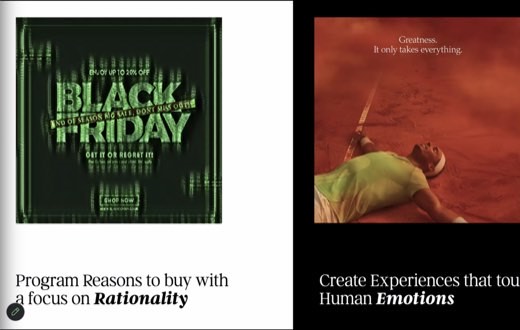
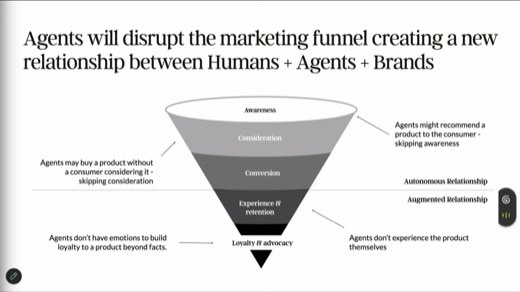
Autonomous means AI acting on the human's behalf, skipping straight past awareness and consideration to conversion. Black Friday ads, in Dom's framing, will eventually be negotiated entirely by agents and disappear from human view . Augmented means human and AI together, still in the loop for product experience, packaging, retention, and loyalty.
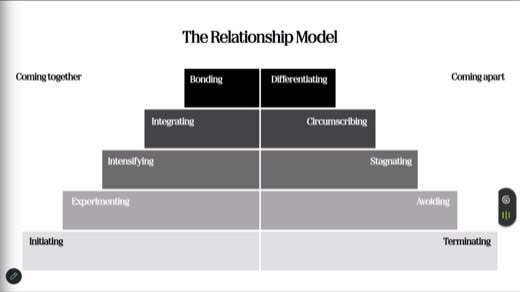
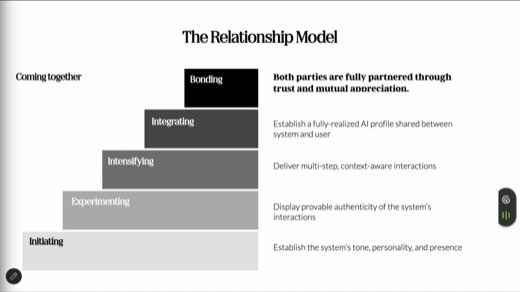
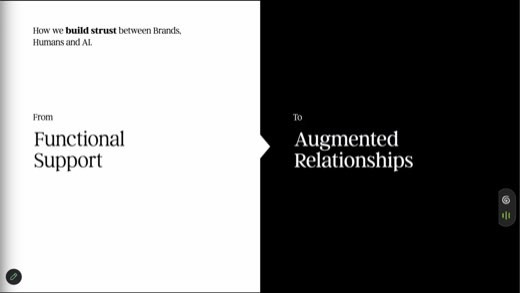
The relationship model underneath both runs from initiating to bonding . Bonding means full trust and mutual appreciation, and it is the target designers must architect for from the first interaction.
Design thinking to thinking design
The judgment · 7:26 PM
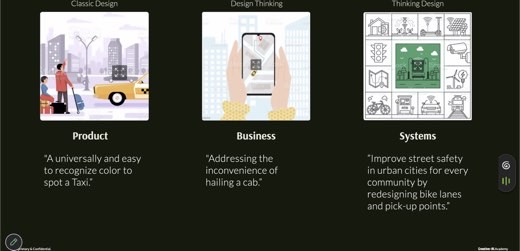
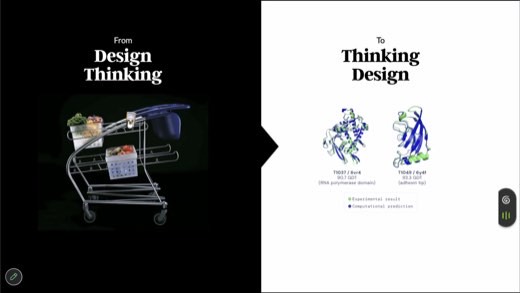
Classic design picked the color. Design thinking fixed the hailing. Thinking design asks what the data could do next.
The taxi example carried all three eras at once: yellow paint solved recognizability (classic design), Uber solved the inconvenience of hailing a cab (design thinking), and thinking design asks the systems question underneath both, if I hail a car, what else can this data improve?
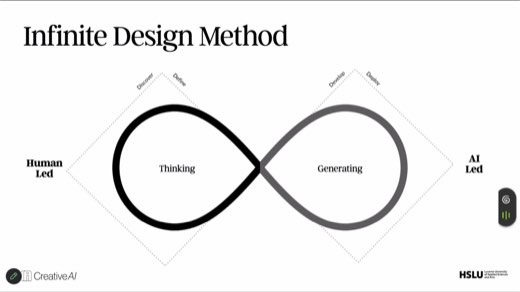
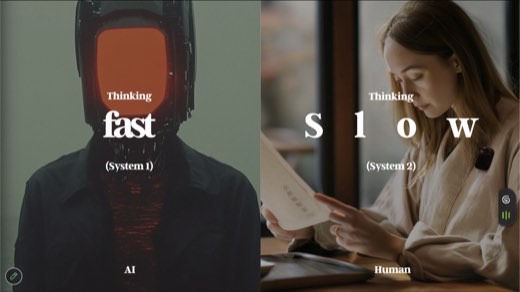
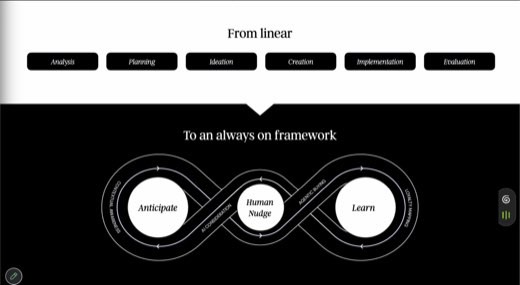
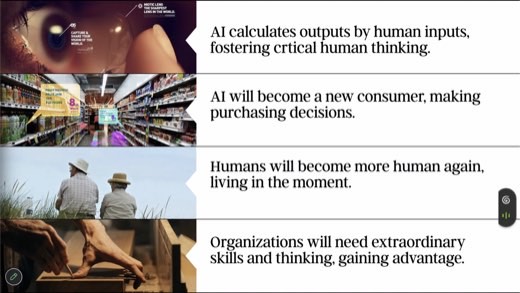
Underneath it all sits Dom's own application of Kahneman's split: he casts AI as running System 1, thinking fast, and humans as running System 2, thinking slow . His own Infinite Design Method runs on that pairing, human-led thinking feeding AI-led generating, in a loop that never fully closes.
Methods and prompts
Five methods to take with you
The lateral reframe
When a "better" version of the same prompt still returns a generic idea, jump to an unrelated world instead of refining further. Dom's own move: instead of a better soap dispenser, an astronaut refilling in space.
Working prompt
Here is my brief: [paste]. I've already tried a direct prompt and a refined one, both came back generic. Reframe the whole problem through an unrelated world: [pick one, a spacecraft, a hospital, a kitchen, a museum]. Think like someone who has never seen this category, and add your sources.
You will know it worked whenthe reframed idea is set in the unrelated world you named, not just the original category with new words, and it names its sources.
Give it two keyframes instead of one description
For any animated motion, stop describing the whole scene. Give the model a start image and an end image and let it fill the middle: an egg, then a hatched chick, and the model animates the hatch.
Working prompt
Here is my start frame: [image] and my end frame: [image]. Animate the transition between them. Hold the camera position and lighting consistent, and only change what has to change for the motion to read.
You will know it worked whenthe motion in between reads as one continuous shot, with the camera position and lighting matching your start and end frames.
The sea-of-sameness check
Before you ship a generated image or line of copy, judge it against the category first. Public prompt libraries produce identical outputs because everyone runs the same prompt.
Working prompt
Here is my draft: [paste or describe]. I answer first, then you check me: my honest read on whether this looks like anyone else's output in this category is [your answer], and here is why. Now tell me what's actually distinct about it, and if nothing is, push me toward something that would be.
You will know it worked whenit names a specific detail that sets your draft apart from the category, or tells you plainly that nothing does yet.
Pick the relationship on purpose
Before building an AI feature or flow, decide out loud whether it should be augmented, human and AI together, or autonomous, AI acting alone. The two demand different designs and different trust.
Working prompt
Here's the moment I'm designing: [describe it]. I answer first, then you check me: my call is that this should be [augmented or autonomous], because [your reasoning]. Now tell me what breaks if I'm wrong, and what the relationship model's first step, initiating, would need to look like either way.
You will know it worked whenit names a concrete failure that would happen if your augmented-or-autonomous call is wrong, then describes the first step under both models.
Control the input and build gradually
Follow the reasoning chain and build context in stages instead of dumping everything at once, the same way more tokens of real context cut down on hallucination.
Working prompt
We're going to build this up in stages instead of one long prompt. Step one: [the first, smallest piece of context]. Confirm you understand it before I add the next layer. I'll keep adding context one piece at a time until you have what you need.
You will know it worked whenit confirms understanding of each small piece before you add the next one, instead of asking for everything up front.
The close · 7:35 PM
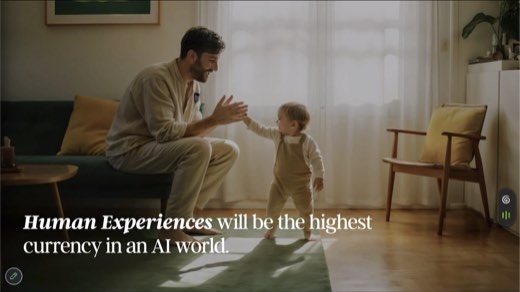
Human experiences will be the highest currency in an AI world
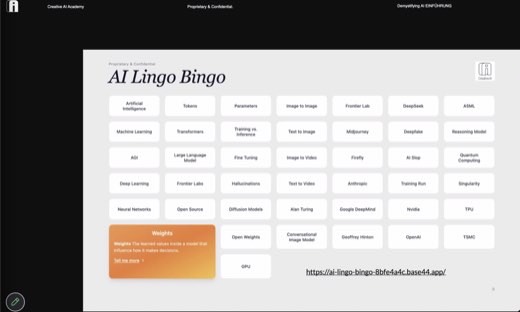
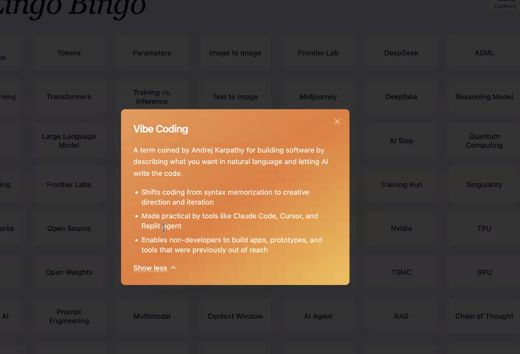
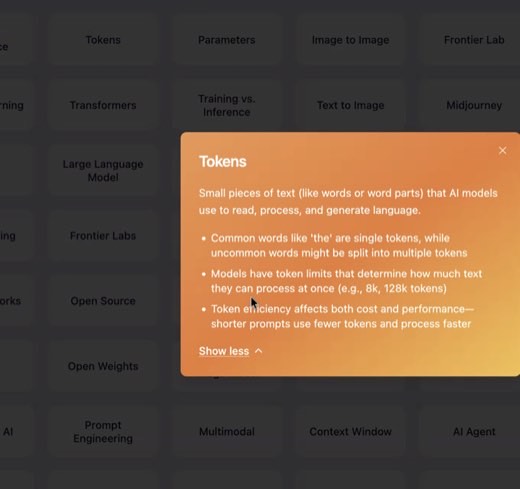
The night closed on Tony's AI Lingo Bingo, a vocabulary app he vibe-coded in about five minutes with Base44 . It covered hallucination, token, transformer, and deepfake in plain-language cards.
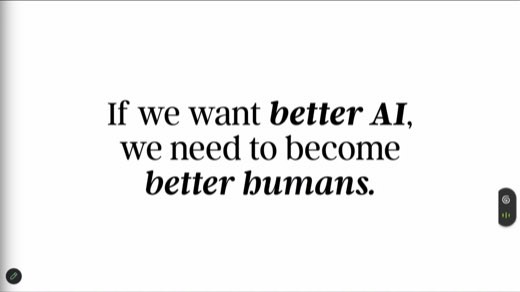
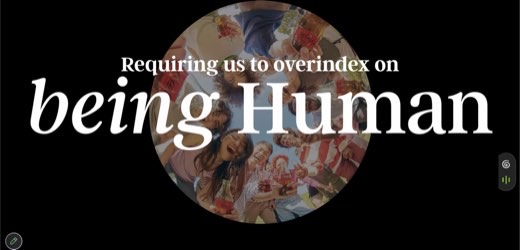
Dom's closing thesis tied the whole night together: if we want better AI, we need to become better humans. Not a slogan, a design brief: overindex on being human, because that's the one input the machine still can't generate for itself.
The shelf
Tools and references
Tools that night
- ChatGPT image (gpt-image-1), for the profile-image homework
- Gemini Nano Banana, at gemini.google.com
- Base44, Tony's vibe-coding platform, built the Lingo Bingo app on it
- Runway, Google Veo, Pika Labs, Krea, flagged for image-to-video next
- ElevenLabs, for audio and voice work
- Claude, noted as not generating images, do not use for the homework
Named in the room
- The Thinking Game, the Hassabis documentary, assigned before Class 3
- Attention Is All You Need, the 2017 transformer paper
- Hard Fork podcast, and Andrej Karpathy's Substack
- Thinking, Fast and Slow and Her, both syllabus reading
Every frame from this class
40 captures, in order. Click any one to see it full size.