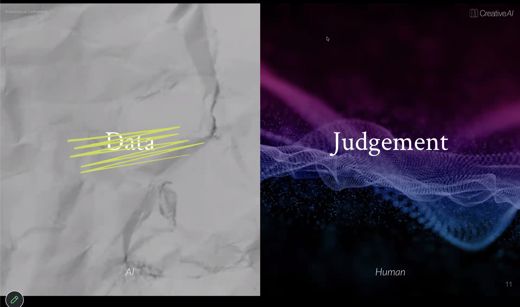
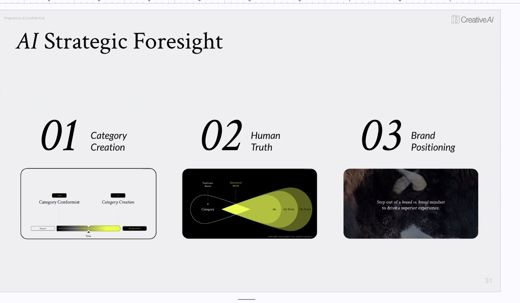
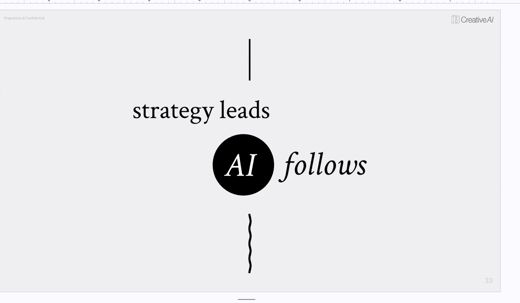
Class 13: AI Strategic Foresight. "AI does the data journey. You are the judgment."

The class in brief
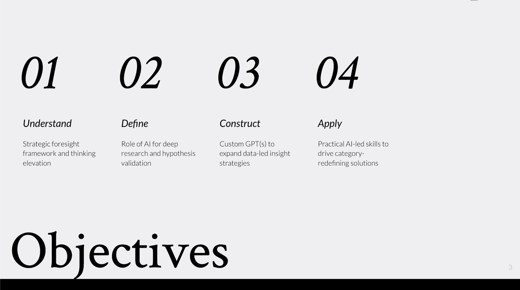
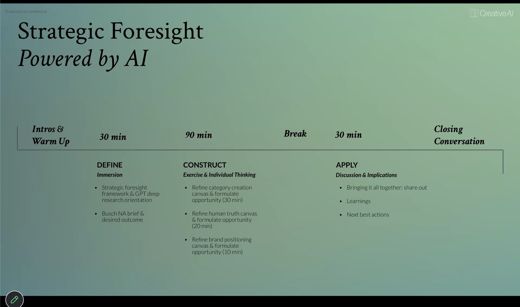
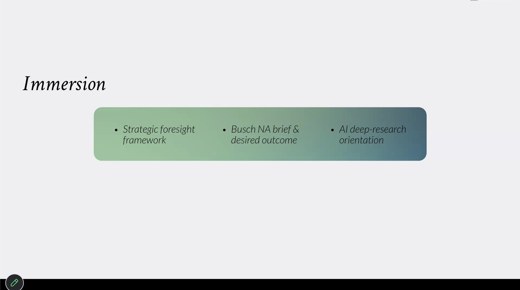
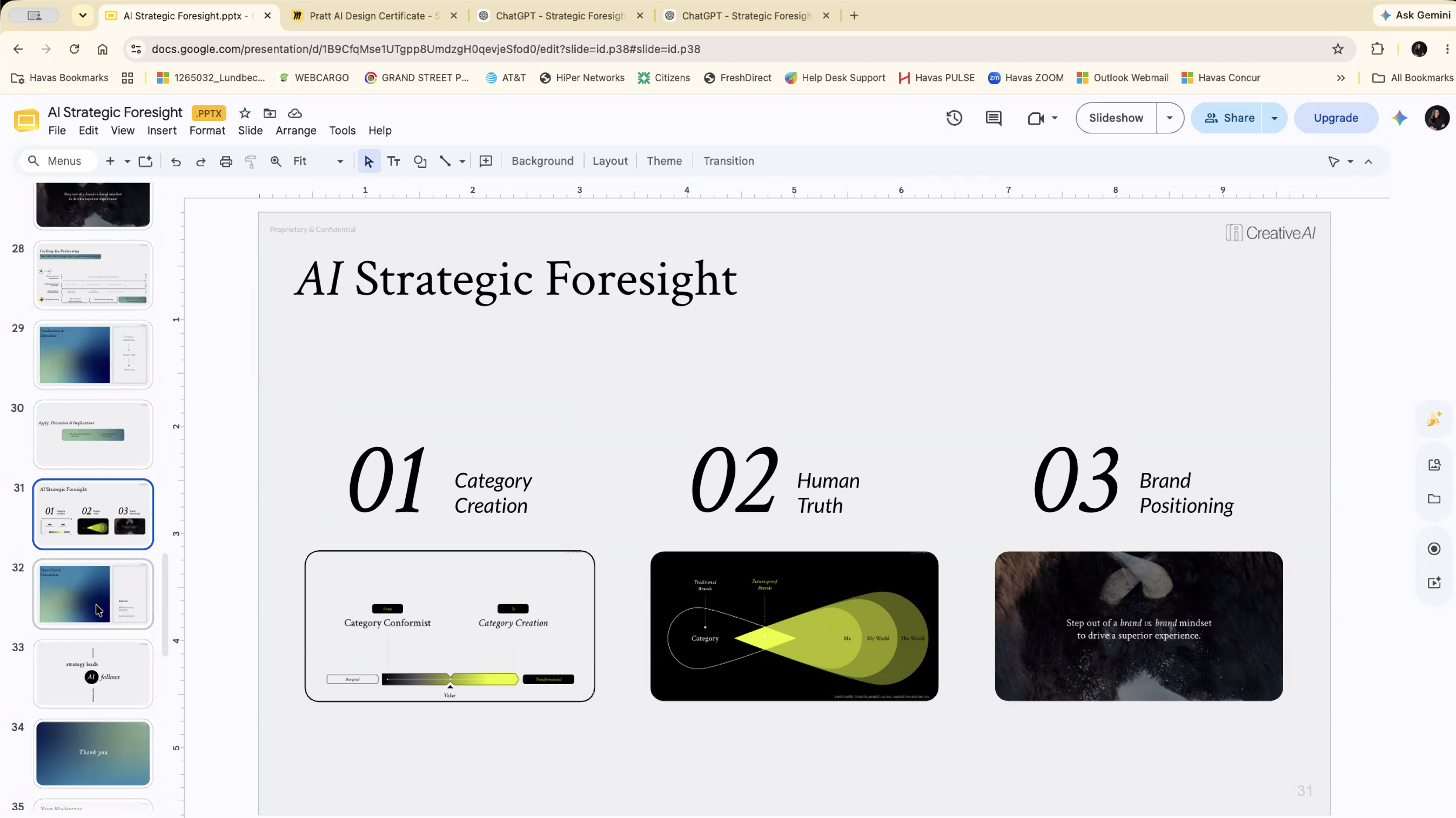
Guest strategist Angella Tapé taught the three-canvas framework her Havas team uses on client work: category first, human truth second, positioning last, with a custom GPT doing the research legwork.
The class ran the full framework live on a Busch NA brief. After this page you will be able to direct AI like a junior analyst on a real brief, while keeping the judgment yours.
Why this matters
Why this matters
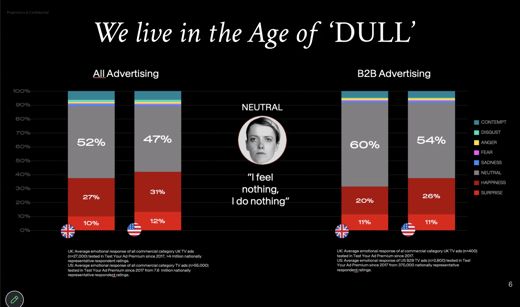
Half of all TV advertising produces no emotional response at all. Strategy decides which half your work lands in.
That claim comes from System1's ad-testing data, which Angella opened with. Her framework is the answer to it: three canvases, worked in order, with AI as the analyst and you as the judge. And always the category before the product: start with the product and, in her words, "I will fail, force-feeding people."
The framework
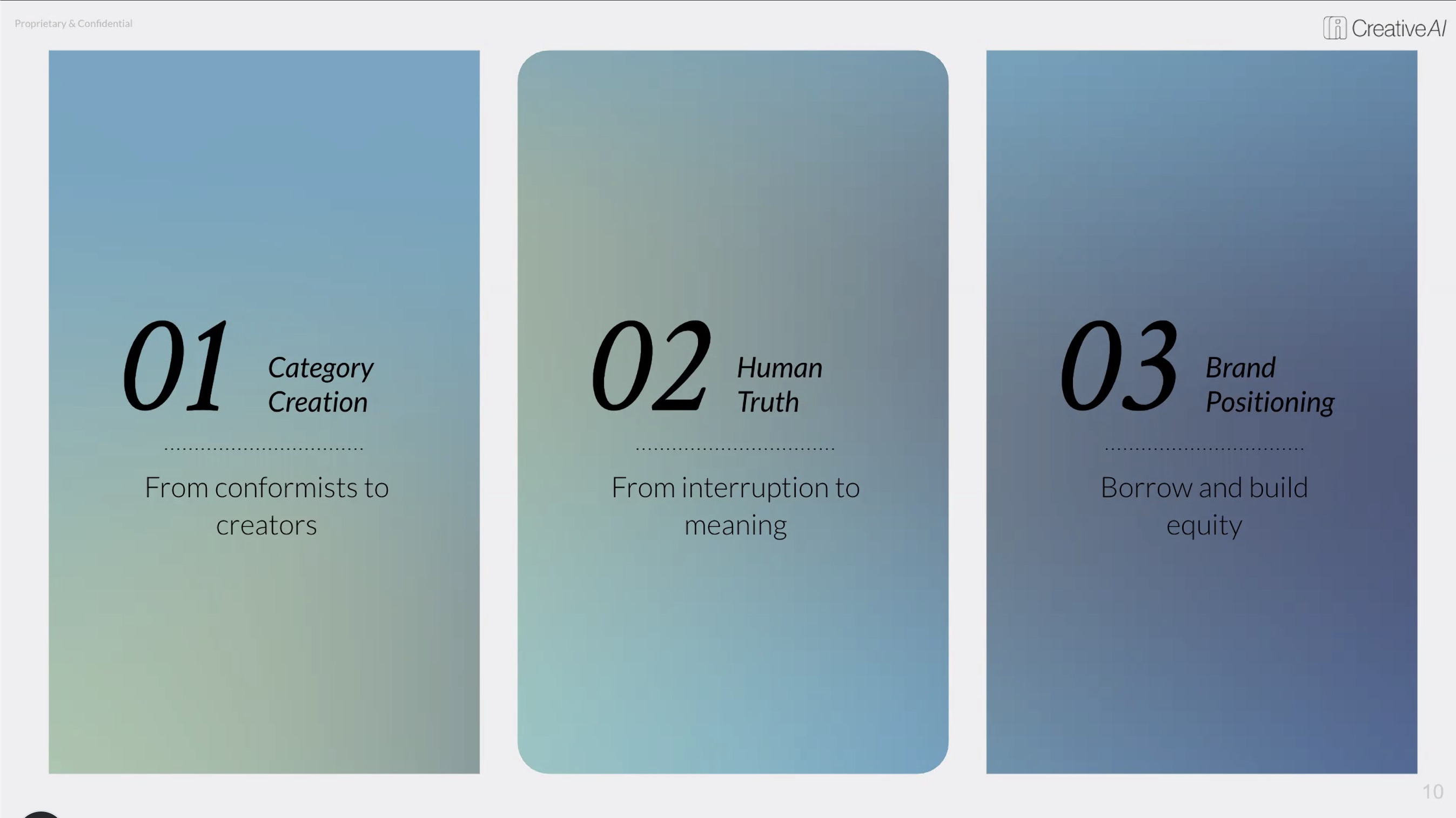
The three canvases
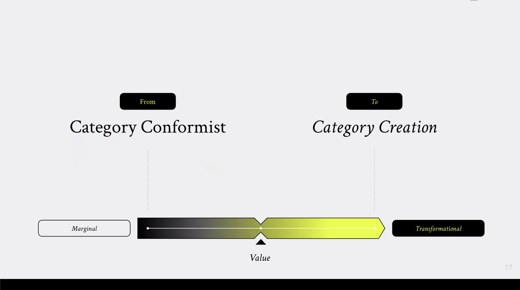
Category Creationfrom conformists to creators
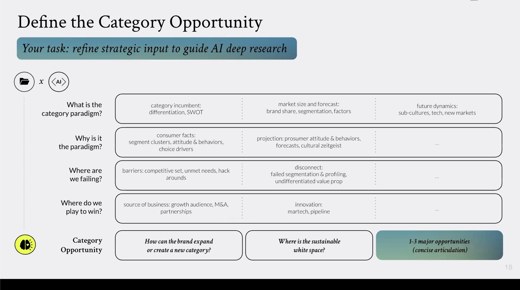
The longest stage on purpose. What market am I actually in? What is the paradigm, and what shift is coming? Where are the gaps? The product stays out of the room for the whole pass.
Human Truthfrom interruption to meaning
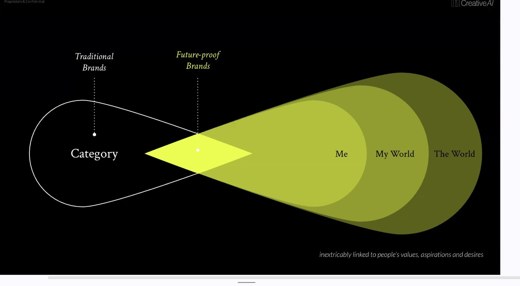
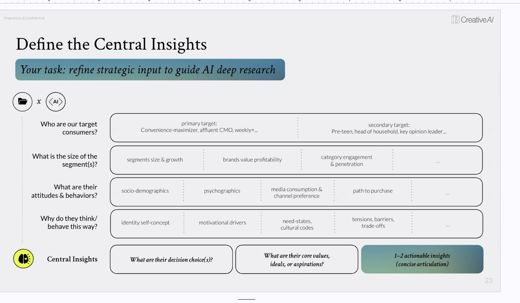
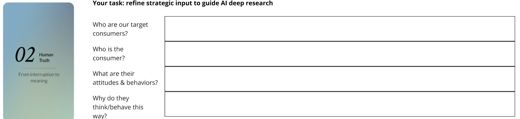
Who are the customers, why do they behave that way, and what single insight sits under it all? Brands that win align to me, my community, or the world.
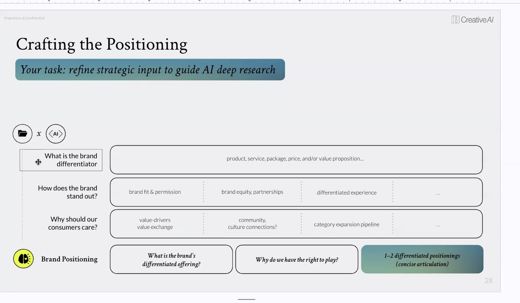
Brand Positioningborrow equity, or build it
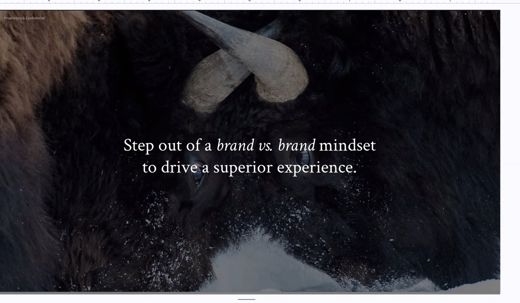
Borrow from an adjacent category, or build from scratch the way Liquid Death did. Step away from the head-to-head mindset and the space opens. Then be single-minded: pick one.
The exercise
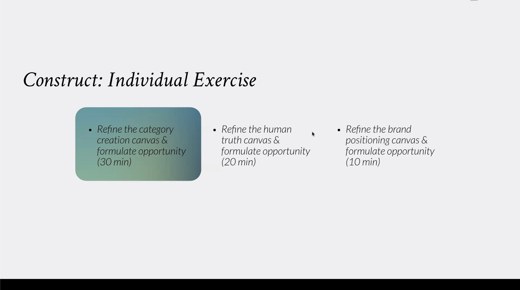
Working the Busch NA brief live
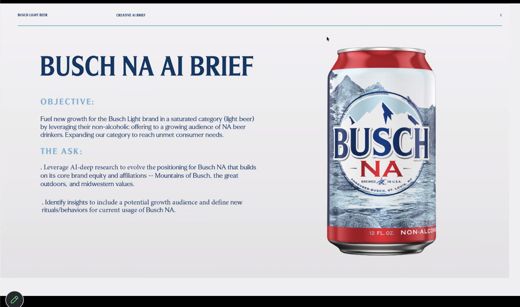
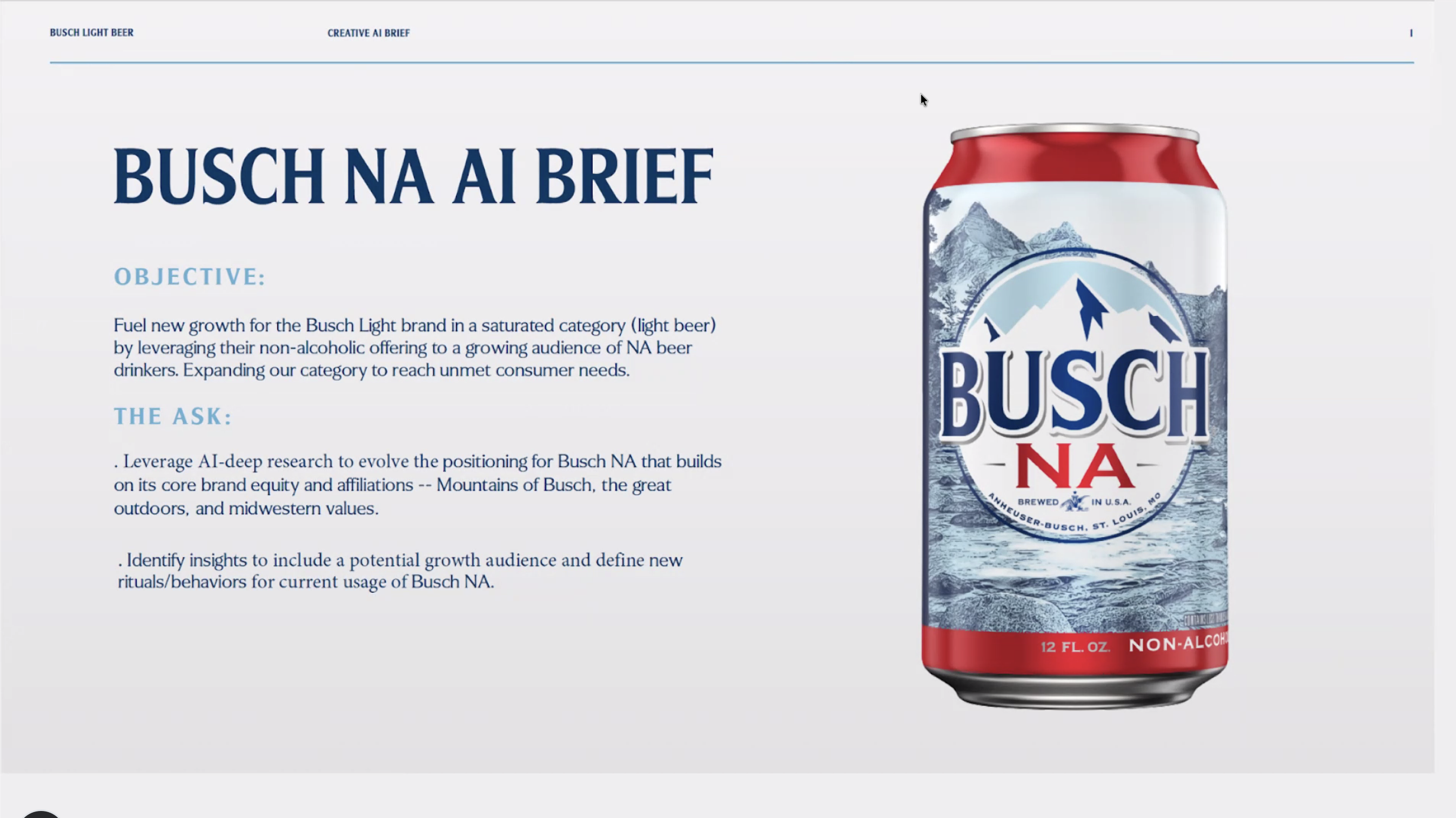
Fuel new growth for Busch Light through its non-alcoholic offering.
Light beer is a saturated category, and non-alcoholic drinkers are a growing audience. The ask: use AI deep research to evolve Busch NA's positioning, building on the brand's core equity (Mountains of Busch, the great outdoors, and midwestern values), then identify a growth audience and define new rituals for how Busch NA gets used.
The brief slide appears below, in From the board
How the exercise ran
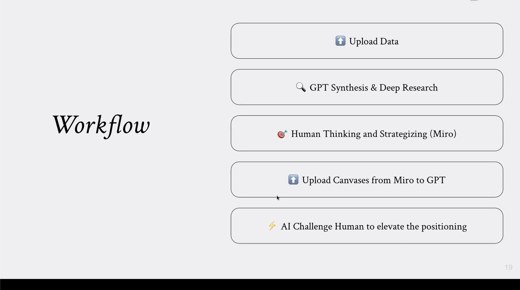
Five steps, from her workflow slide.
- Upload the data pack.
- Let the agent run deep research.
- Do the thinking and strategizing yourself in Miro.
- Upload your canvases back to the agent.
- Finish by letting AI challenge the positioning to sharpen it.
Category first, product last
The first canvas bans the product from the room: what market is this, what paradigm, what shift is coming, where are the gaps. Start with the product and you end up force-feeding people.
A market for people who don't like beer
One classmate, who doesn't drink and doesn't like the taste of beer, asked the analyst how big the market is for people who want the ritual without the taste. It came back with real segments, and the class watched a personal observation turn into a researchable audience in minutes.
Pushing past the obvious occasions
Another run kept getting camping, tailgating, and boating back from the model, all summer, all weekend. The fix was a direct order: bring it into the days of the week. The lesson inside it: the model defaults to the most photographed version of an audience until you push it.
Another run left the brief entirely
Same canvases, aimed at repositioning a church in Madison County. The framework held anyway. That is how you know it is a framework and not a template.
From the board
What the class made in Miro
Methods and prompts
Five methods to take with you
Act as the boss of a junior analyst
Treat the model like a bright junior: direct it, redirect it, and ask for conclusions instead of accepting a data dump.
Working prompt
Synthesize everything above into exactly 2 categories of opportunity. Table format. End with one short question for me. Do not ask anything else.
You will know it worked whenthe model hands back exactly two categories of opportunity in table format, ending with one short question instead of several.
Ask for what's missing
The idea usually lives in what the research does not say. Ask for the missing data, not more of the found data. Her words: "Tell me what does NOT exist. From there you get the idea."
Working prompt
Based on this research: tell me what does NOT exist in this market, and what data I am missing. List the absences, not the findings.
You will know it worked whenit lists real absences in the market instead of restating what the research already found.
Give it an executive's job
Renaming the model's role from assistant to executive changes tone, depth, and brevity everywhere at once. One word doing the work of a page of formatting rules.
Working prompt
From now on you are an executive strategist, not an assistant. Max 5 sentences per answer, tables where useful, no jargon, answer your own research questions instead of asking me. Confirm and continue.
You will know it worked whenits answers get sharper and shorter, staying under five sentences with no jargon, without you re-explaining the rules.
Say what you want rather than what you do not
Negatives confuse it, so she keeps a full list for reining it in.
- Use an executive style.
- Keep it to five sentences max.
- Use table format.
- Skip the jargon.
- Stop asking me questions.
- Answer your own research questions.
Working prompt
Rewrite your instructions to yourself as positive directives only: what you WILL do, in what format, at what length. Then follow them.
You will know it worked whenit rewrites its own instructions as positive directives and then actually follows them, instead of slipping back into a list of things not to do.
Build the tool rather than the chat
A workflow you run twice deserves to be a tool. Know the workflow in your head first, then write it as strict, numbered steps with a named role. Custom GPT or Claude Project, either way the magic is the prompt.
Working prompt
Help me turn this workflow into a reusable assistant. Here are my steps: [list them]. Rewrite them as strict sequential instructions with a named role, an intake step, staged framework steps, and a fixed output format, always addressing the user.
You will know it worked whenyour steps come back as strict, numbered instructions with a named role, ready to paste into a custom GPT or Claude Project.
Deeper detail
Inside her custom GPT
She opened the GPT and showed the class what's inside. Know your workflow in your head first, then write it as strict, numbered steps with a named role, always addressing the user. The same thing works as a Claude Project. Her words: the magic is the prompt, and it moves between tools.
The shelf
Tools and references
Tools that night
- The Strategic Foresight GPT (the class keeps access)
- The three canvases in Miro (captures above)
- Claude Projects, the same idea built in Claude
- Codex, used to refactor a human-readable prompt into machine steps
Cases she mentioned
- BTS: the community that never gives up on you
- Liquid Death: brand equity built from nothing
- McDonald's Taiwan: pit stops for cyclists
- Norway's macho non-alcoholic beer, now #1 with new mothers
Every frame from this class
18 captures, in order. Click any one to see it full size. Recovered from the raw class archive and cropped to the slides; the board exports above remain the workshop's own artifacts.