Class 16: Thinking Design + Think Print. "If you always think the same way, you just create a loop of the same of yourself."

Global Head of Design Intelligence, The Coca-Cola Company
The class in brief
Dom ran a night built around one idea: prompting from your own default thinking just feeds AI back to you in a loop. After this page you can do three things.
- Name your own default thinking archetype using Think Print.
- Prompt AI in your stretch instead of your default.
- Run any brief through Dom's prime-then-loop process, which he calls Infinite Design.
The mediocrity loop
Why this matters · 6:12 PM
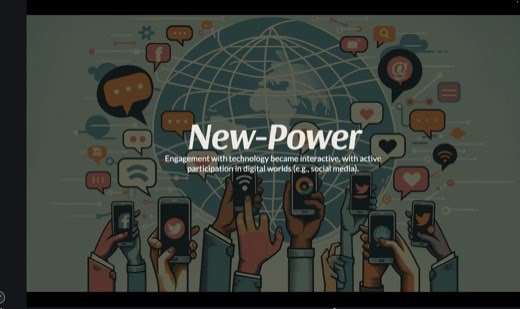
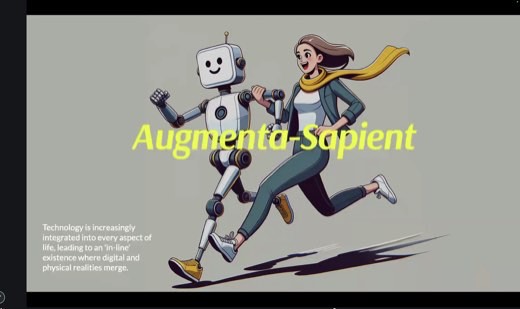
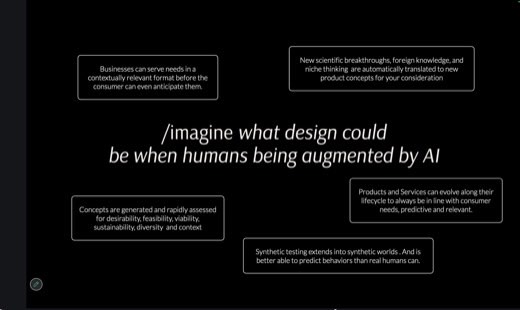
Old power was passive. New power is interactive. Augmented power runs in-line with your life.
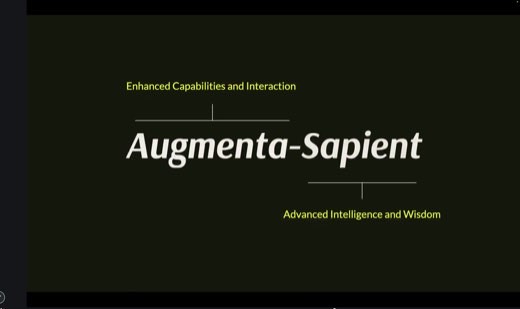
Dom opened on a three-stage power ladder , landing on "augmented sapient": technology running in-line with life instead of separate from it .
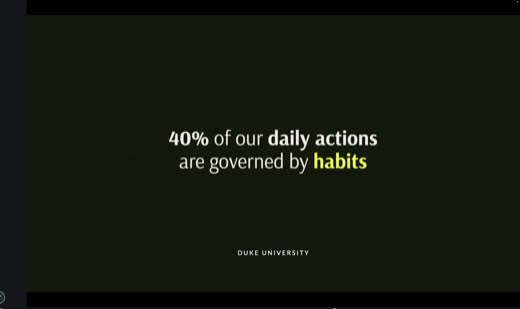
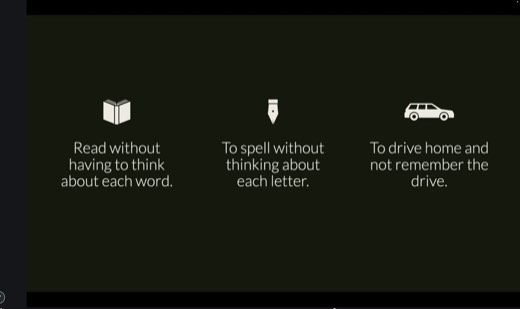
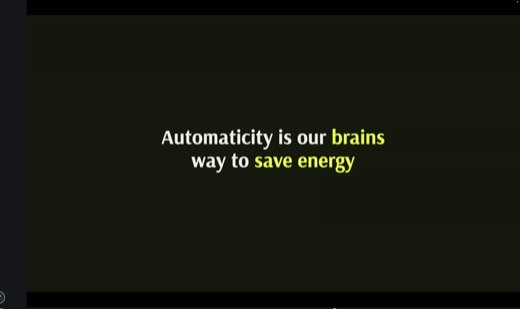
The pivot was automaticity: about 40% of daily actions run on habit , and the brain defaults to autopilot to save energy . The room spent ten minutes naming one thing each person does without thinking, then how they would disrupt it.
The class raised three examples.
- Brushing teeth too aggressively.
- Checking the phone before anything else in the morning.
- Swapping a Candy Crush habit for solitaire, then relapsing into a new app.
Noticing the loop turned out to be the only way out of it.
The cost of offloading
The cost of offloading · 6:57 PM
Unexamined AI use bolts a prediction machine onto an autopilot brain.
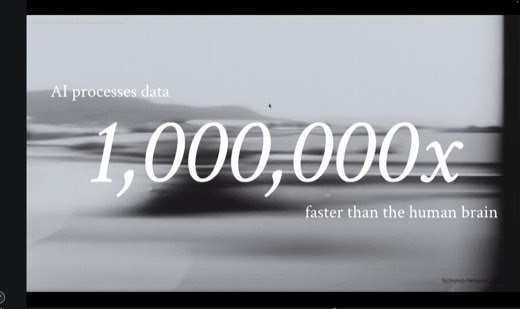
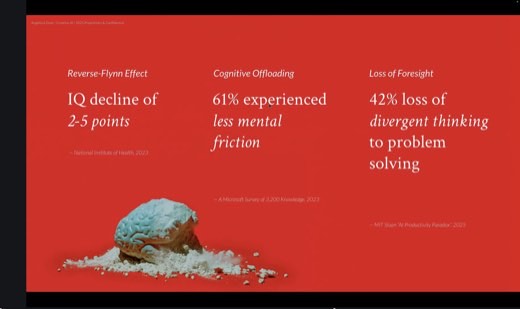
AI processes data roughly a million times faster than the human brain . And the deck's own numbers make the tradeoff concrete .
61% of knowledge workers report less mental friction, which sounds like relief until you notice the other two numbers moving the wrong way.
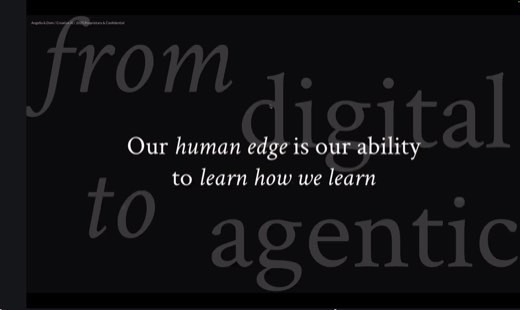
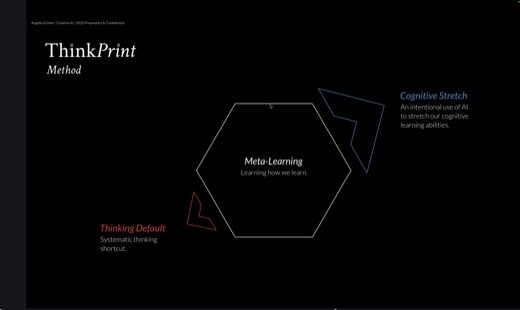
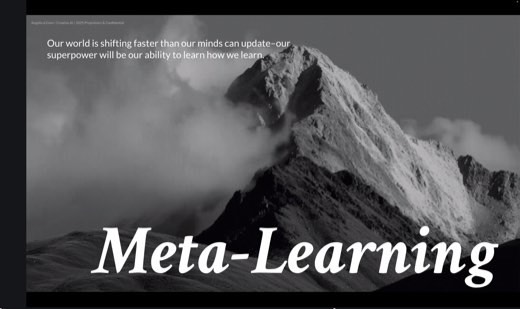
Those two numbers are a 2-5 point IQ decline and a 42% loss of divergent thinking. Dom's answer is not to unplug, it is meta-learning: knowing how you personally learn, so AI augments that instead of replacing it.
The framework · 7:01 PM
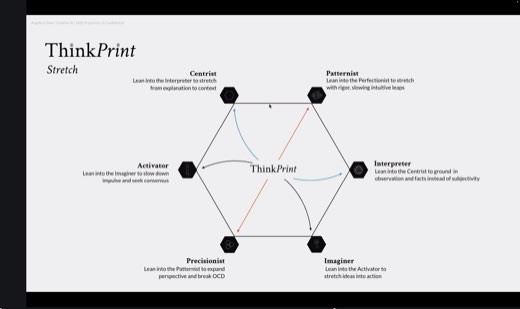
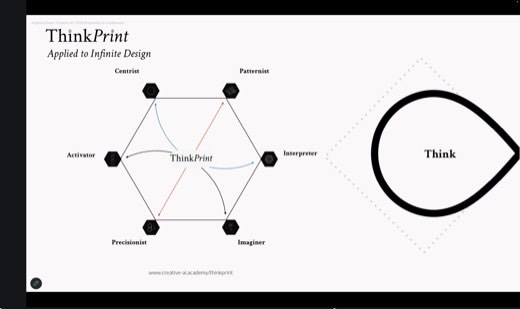
The six Think Print archetypes
Centristfocus and control
Grounds in facts first, wants clarity before moving.
Patternistsystem and repetition
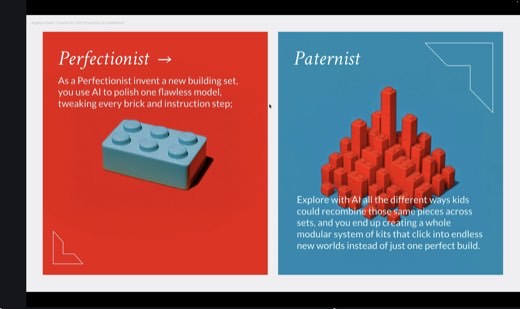
Sees breadth: what else can these same pieces build.
Precisionistprecision and order
Goes deep, polishing one version until it is flawless.
Imagineervisionary, inspiration
Opens the world as wide as possible before narrowing anything down.
Interpretermeaning and influence
Reads between the lines, translates subtext into direction.
Activatoraction and execution
Turns the idea into one concrete next step.
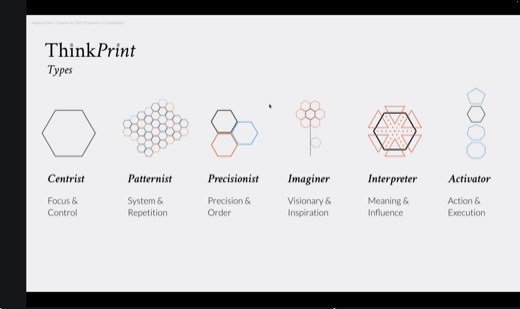
Each archetype pairs with an opposite stretch . Either write your own prompts as your stretch, or assign the stretch role to AI and answer as your default yourself.
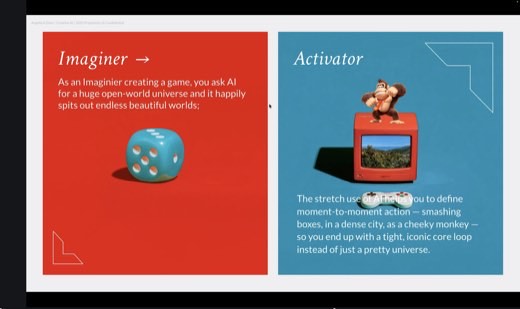
The worked example was a video game: an Imagineer alone gets an endless, beautiful open world. The same idea pushed through the Activator lens gets a tight, iconic core loop about smashing boxes as a cheeky monkey in a dense city .
The exercise · 7:13 PM
Take the test to find your default and your stretch
Take the short or long Think Print test, then post your result to the class Miro board.
The test lives at creative-ai.academy/thinkprint. Once you know your default, the method is simple: write your own prompts as your stretch, or tell the AI "act as my stretch, I'll write as my default, answer in stretch mode."
Dom's own habit: sketch on paper before opening any AI tool. The hand-to-brain link changes what comes back.
Awareness is the first move
The default is not a flaw to fix. It is a shortcut the brain built to save energy. The point of naming it is not to abandon it, it is to notice when you are about to feed AI your own pattern back to yourself.
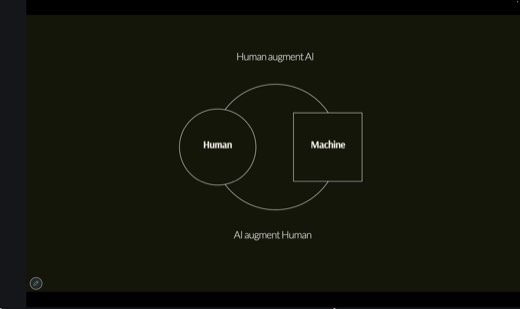
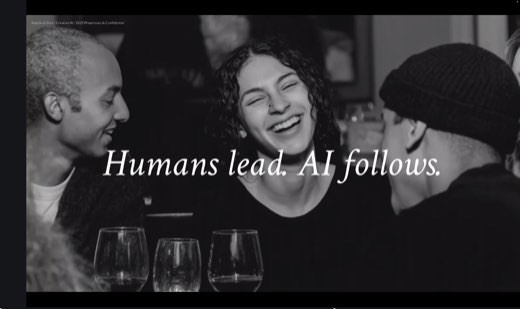
Humans lead, AI follows, the pivot line that closed the lecture
"Humans lead. AI follows" ran as the pivot line out of the lecture and into the test , right before the room went quiet to take the test individually.
The craft · 7:25 PM
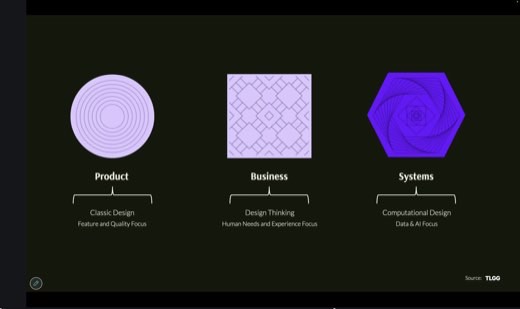
From classic design to computational design
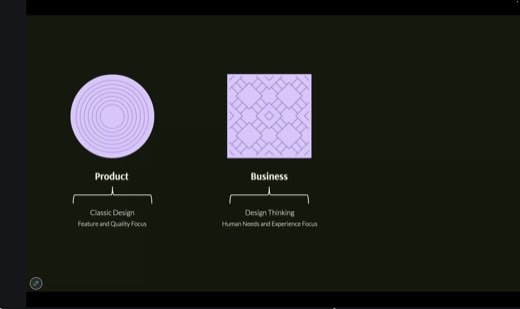
Classic designfeature and quality focus
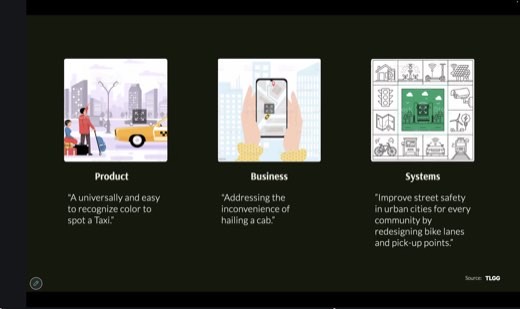
A taxi's color, made easy to spot from a block away. The product itself is the whole unit of design.
Design thinkinghuman needs and experience focus
Uber does not redesign the cab, it redesigns the inconvenience of hailing one.
Computational designsystems and data focus
New York took Uber's ride data together with the city's own accident data and used the two to place protected bike lanes between parked cars and the sidewalk.
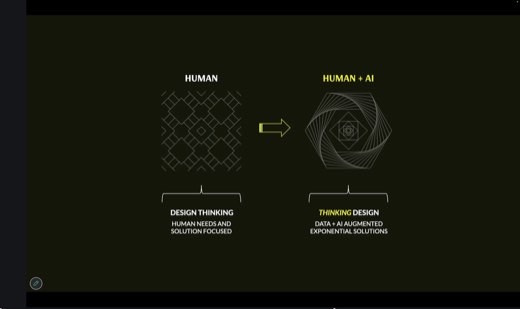
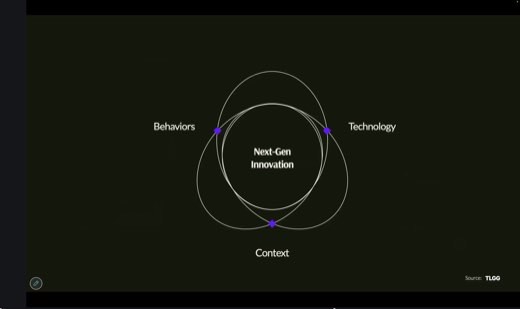
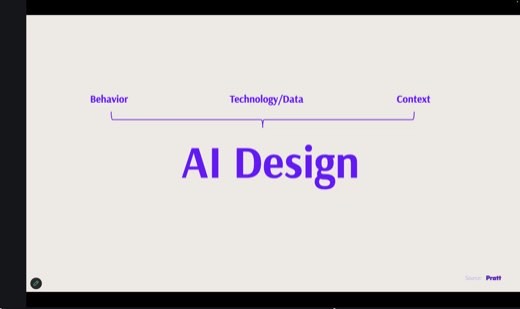
The taxi example ran twice, once per rung , then side by side . Dom's framing for where this goes next: "the next generation of innovation is not business, technology, and human, it's actually behaviors, technology, and context."
The close, and the homework
The close · after the break
Prime it and then loop it on the Coca-Cola brief
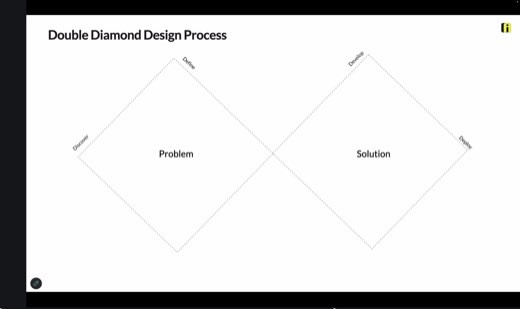
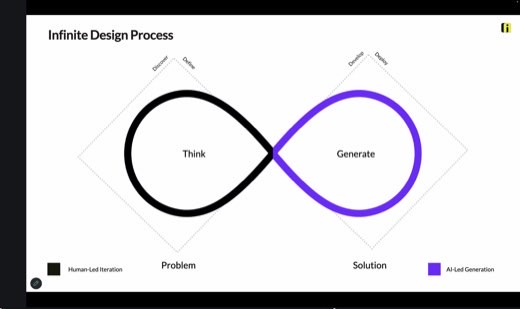
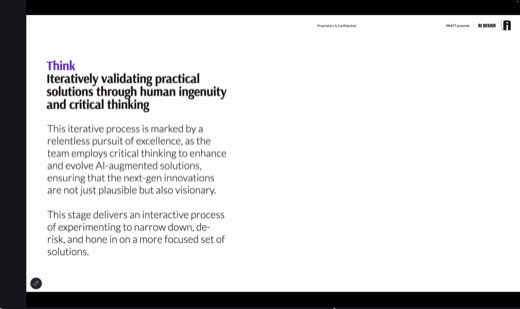
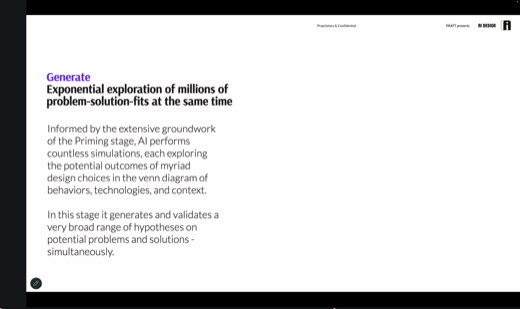
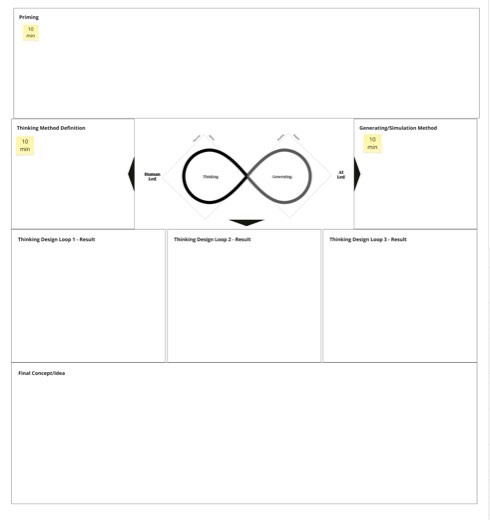
Infinite Design is a think-and-generate loop laid on top of any design process, never a replacement for one.
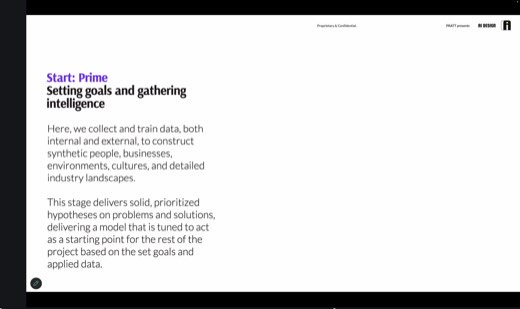
- Prime it, giving the machine context it doesn't have, using the prompt design canvas: goal, audience, situation, known data, blind spots, what not to do.
- Pick the thinking method, your Think Print stretch as the default choice.
- Pick the generation tool for each stage.
- Run about three design loops, challenging the machine each time before moving on.
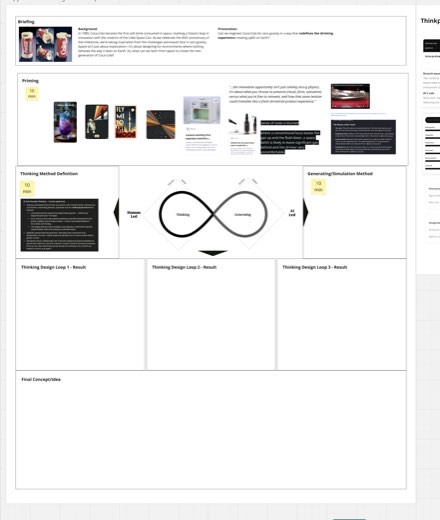
In 1985 Coca-Cola became the first soft drink consumed in space, the Coke Space Can; last year marked its 40th anniversary. The provocation: engineer Coca-Cola for zero gravity in a way that redefines the drinking experience and creates uplift back on Earth, through the product, packaging, ingredients, or another route.
Dom's spoiler of the lazy answer: small bubbles that burst in your mouth.
The homework runs the same loop on Miro: prime, apply your stretch, run three loops, screenshot the progression. Dom reviews it for about 30 minutes in the following week's class.
Try this prompt
Quiz me on the six Think Print archetypes and their stretch pairings. Then hand me a small brief and walk me through one Infinite Design loop on it, priming first.
You will know it worked whenit quizzes you on the six Think Print archetypes and their stretch pairings first, then walks a small brief through one full loop, priming before it generates anything.
Methods and prompts
Five methods to take with you
Predict your Think Print before you take it
Guess your own default and stretch first. Comparing your self-read to the actual test result is the real diagnostic, not the test alone.
Working prompt
My guess at my own default thinking archetype and my stretch, before I take the real test: [my answer]. I answer first, then you check me. Explain what each of the six archetypes optimizes for, and tell me honestly if my guess holds up or if I am flattering myself.
You will know it worked whenit tells you honestly whether your own guessed archetype and stretch actually hold up against the real test, not just a flattering confirmation.
Prompt in your stretch rather than your default
Assign the stretch role to the AI and answer as your own default yourself, or write the whole prompt as your stretch. Either way, the output stops rhyming with your own pattern.
Working prompt
I am a [your default archetype]. For this brief, act as a [your stretch archetype] instead: [the brief]. Push for what a [stretch archetype] would notice that a [default archetype] would miss.
You will know it worked whenit points out something specific your stretch archetype would notice on this brief that your own default archetype would have missed.
Prime before you generate anything
Give the machine the context it cannot know before asking it for a single idea. This is the prompt design canvas, condensed into one paste.
Working prompt
Before we generate anything, here is my priming: Goal: [what I'm trying to achieve]. Audience: [who this is for]. Situation: [what's true right now]. Known data: [what I already know]. Blind spots: [what you cannot know from here]. What not to do: [the guardrail]. Confirm you understood all six before we start.
You will know it worked whenit confirms back all six priming fields, including the blind spots and the guardrail, before generating a single idea.
Run three challenge loops
Infinite Design in miniature: generate, challenge, regenerate, three times. The challenge step is where your stretch archetype earns its keep.
Working prompt
Here is loop 1's output: [paste]. Challenge it as my [stretch archetype]: what did this miss, what is too safe, what is too on-the-nose. Give me loop 2 based on that challenge, then ask me if it is ready for loop 3.
You will know it worked whenloop 2 actually responds to the specific gaps the challenge named in loop 1, and it asks before moving on to loop 3.
Sketch before you prompt
The hand-to-brain link processes information differently than typing does. Draw or write the idea out first, then describe it, then generate.
Working prompt
Here is my hand sketch of the idea, described in words: [description]. Before you generate anything, tell me back what you understood from the description, then wait for me to confirm before you produce a single output.
You will know it worked whenit restates what it understood from your description and waits for your confirmation before producing a single image.
The shelf
Tools and references
Tools that night
- The Think Print test, short and long versions, at creative-ai.academy/thinkprint
- Miro: per-student Infinite Design canvases, the prompt design canvas template, a thinking-methods handbook
- ChatGPT, Claude, and Gemini as the generation tools per workflow stage; "OpenAI Codex or Claude Design" named for a later stage
Named in the room
- The 1985 Coca-Cola Space Can, this brief's real-world anchor
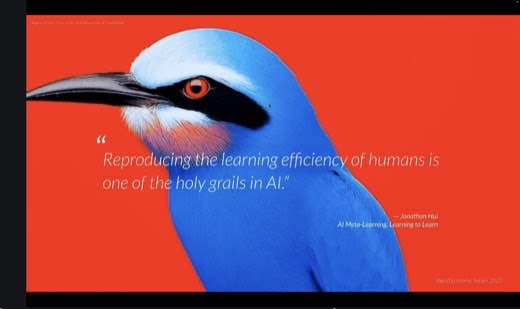
- Jonathan Hui, "Learning to Learn" (AI meta-learning)
- The NYC Uber-data bike-lane story, cited as system-thinking-as-design
Every frame from this class
52 captures, in order. Click any one to see it full size.